Where to Place an Oxygen Concentrator at Home: Power, Airflow and Space
Picking the right spot for a home oxygen concentrator: a safe socket, room to breathe, sensible tubing routes and a bedroom your parent can still sleep in.
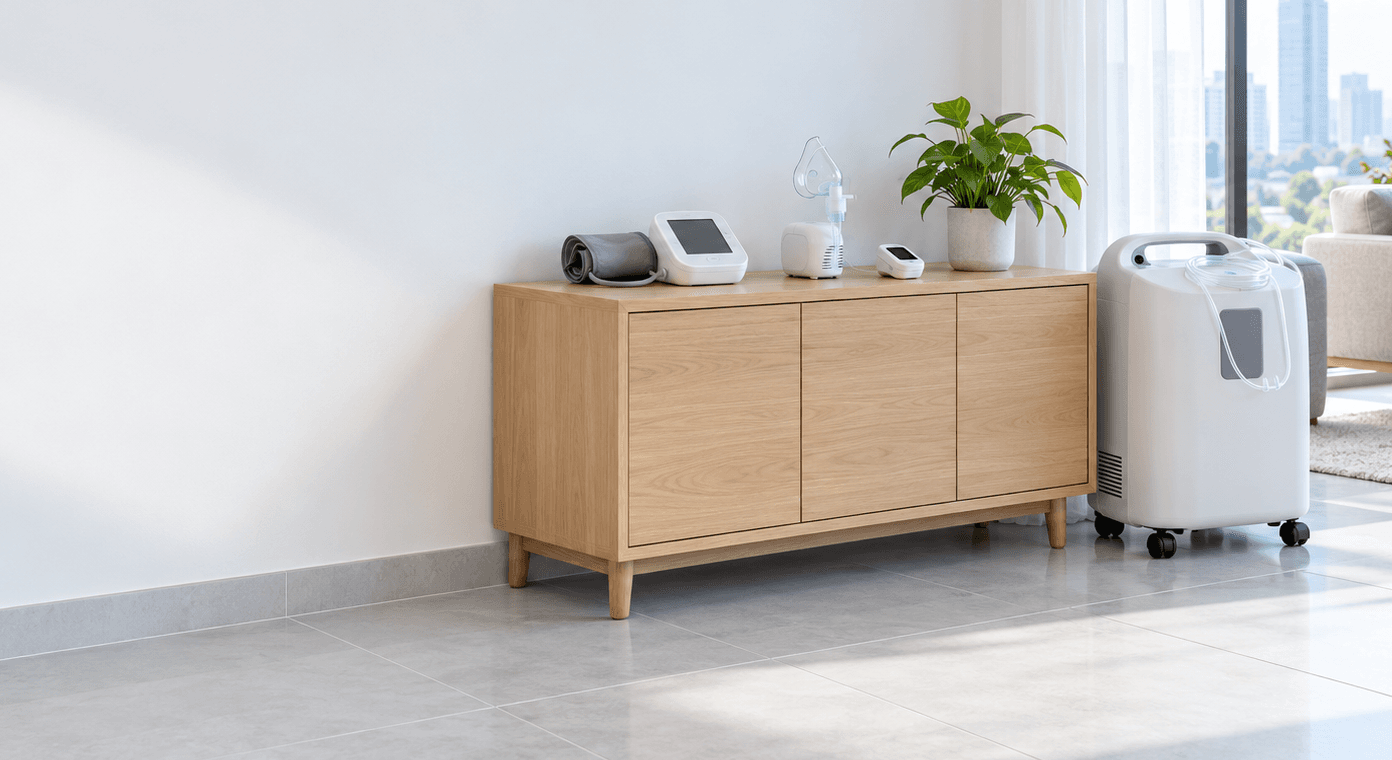
The machine has arrived, the box is open, and now everyone is standing in the living room asking the same thing: where should the oxygen concentrator go? A good spot makes daily use easier and safer. A poor one means tangled tubing, a hot machine and a parent who cannot sleep. This guide covers the practical choices.
This is general household information, not medical advice. Follow the doctor's instructions for how and when the oxygen is used, and the setup steps in the manual for your exact model.
Choosing the room
Start with where your parent actually spends their hours. If oxygen is mostly used at night, the bedroom is the obvious home for the machine. If it is used through the day, the living room or a spot near their favourite chair may make more sense.
Bedroom placement
In the bedroom, place the concentrator where the tubing reaches the bed comfortably without stretching across a walkway. Many families put it at the foot of the bed or beside a wardrobe, rather than right next to the pillow, so the gentle hum is less noticeable.
Living room placement
In a terrace house or condo living room, choose a corner away from the main path to the kitchen and front door. Children, visitors and the vacuum cleaner all pass through here, so a quiet corner keeps the machine from being knocked.
One room or two?
Moving a concentrator between rooms every day is possible on wheels, but it adds strain and risk. If your parent splits their day, ask whether longer tubing from one fixed spot is a better plan. Compact models such as the Yuwell 7F-5 Mini are easier to shift; we confirm sizes for the exact model on WhatsApp.
Power points and sockets
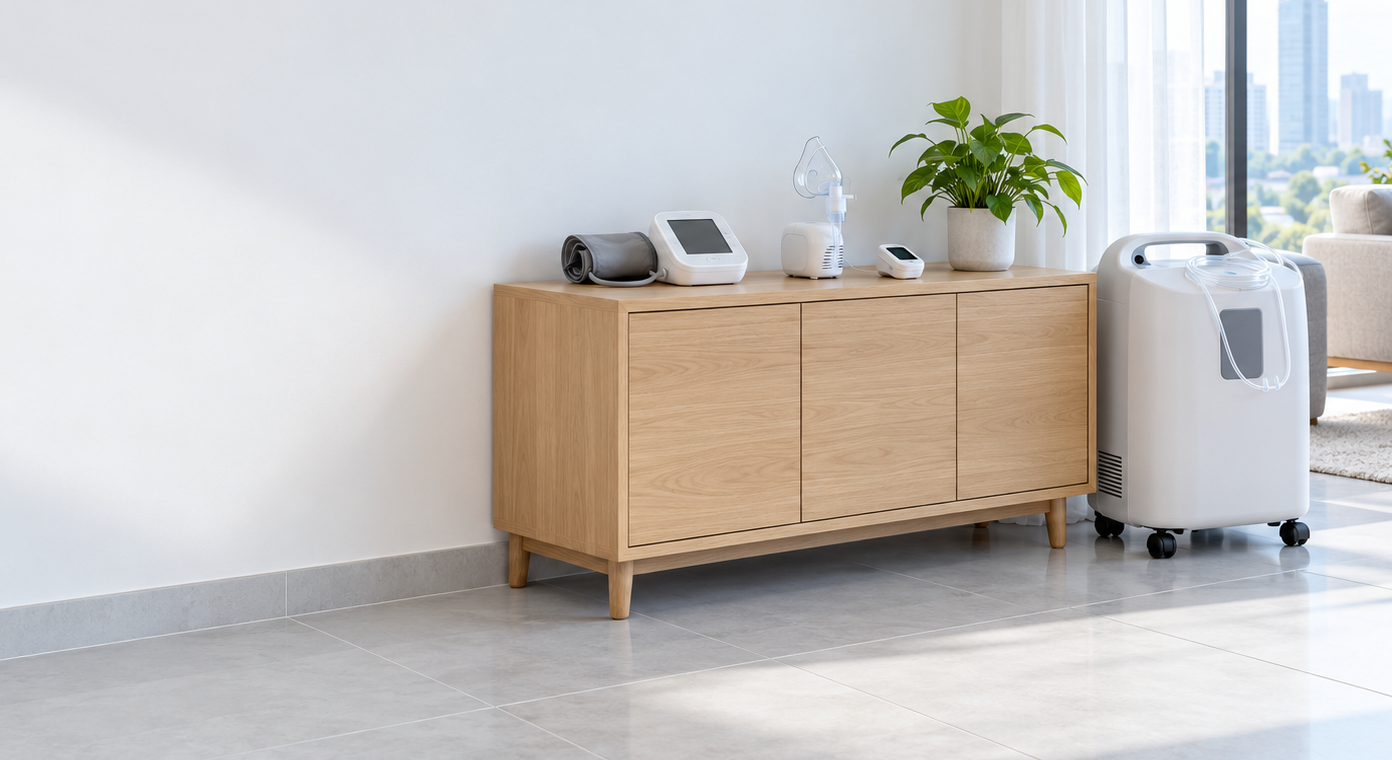
Older Malaysian homes often have few sockets, and the convenient ones are already busy with the TV, fan and phone chargers. The concentrator deserves its own.
Plug straight into the wall
Wherever the manual allows, plug the concentrator directly into a wall socket rather than a multi-plug adaptor or a long extension reel. Shared adaptors can overheat when several appliances run at once, and a loose plug can switch the machine off without anyone noticing.
Check the socket itself
Look for scorch marks, a wobbly plate or a switch that feels loose. If anything looks wrong, have an electrician check it before the machine goes in. It is a small job that removes a real worry, and it is far easier to do before the machine is in daily use.
Keep the switch visible
Put a small label on the socket switch so no one turns it off by habit when they leave the room. It sounds minor, but in busy households it happens.
Airflow, heat and humidity
A concentrator draws in room air and releases warm air. If it cannot breathe, it works harder, runs hotter and may alarm.
Leave space on every side
Keep the machine away from walls, curtains, bedsheets and furniture. The manual for your model gives the exact clearance; stick to it. Never tuck the concentrator inside a cupboard or behind a closed curtain to hide it.
Avoid heat and direct sun
- Away from windows that get the afternoon sun.
- Away from the kitchen, gas stove and any open flame, including prayer candles and joss sticks.
- Not directly under an air-conditioner drip or beside a window that lets rain in.
- Not on thick carpet that blocks vents underneath.
Dust and humidity in Malaysian homes
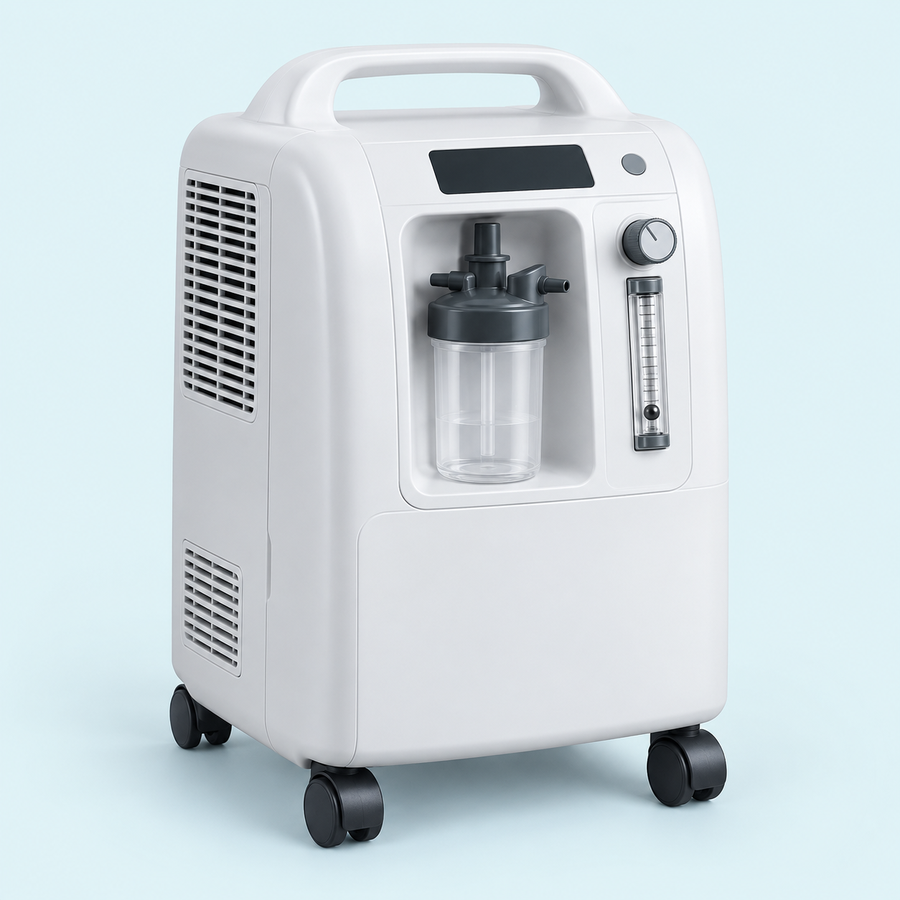
Our humid climate and dust from open windows mean filters need regular attention. Check the intake filter as the manual says and keep spare tubing and a clean humidifier bottle ready. Our oxygen concentrator range lists the models we support, and accessories are in the full catalogue.
Planning the tubing route
The tubing is where most household accidents happen. Plan its route as carefully as the machine's spot.
Keep walkways clear
Run the tubing along walls and around furniture, not across doorways or the path to the bathroom. Night-time trips to the toilet are when an elderly parent is most likely to trip.
Watch for kinks and pinches
Check that tubing is not trapped under a bed leg, a door or a chair wheel. A pinched line can reduce the oxygen reaching your parent without any obvious sign.
Pets and grandchildren
Cats chew, and small children pull. If either lives in the house, route tubing out of reach where you can and check it daily.
Final checks before first use
Before the first session, run through a short checklist together with whoever helps with care:
- Machine on a firm, level floor with clearance on all sides.
- Plugged directly into a wall socket that is labelled.
- No flame, heater or stove nearby, and a no-smoking sign on the door.
- Tubing routed along walls, with no kinks.
- Manual and the doctor's written instructions kept beside the machine.
Help choosing the right model
The right placement often depends on the machine's size, so it helps to decide both together. Our buying guide explains what to have ready. We deliver across Malaysia, including homes in Petaling Jaya, George Town and Kuching.
Not sure which model fits your room, or want a second opinion on the spot you have picked? Ask on WhatsApp and we will confirm the details for the exact model.