Oxygen Concentrator or Oxygen Cylinder at Home: How They Differ
Concentrator or cylinder? A plain guide for Malaysian families on how the two home oxygen options differ in power, refills, space and safety.
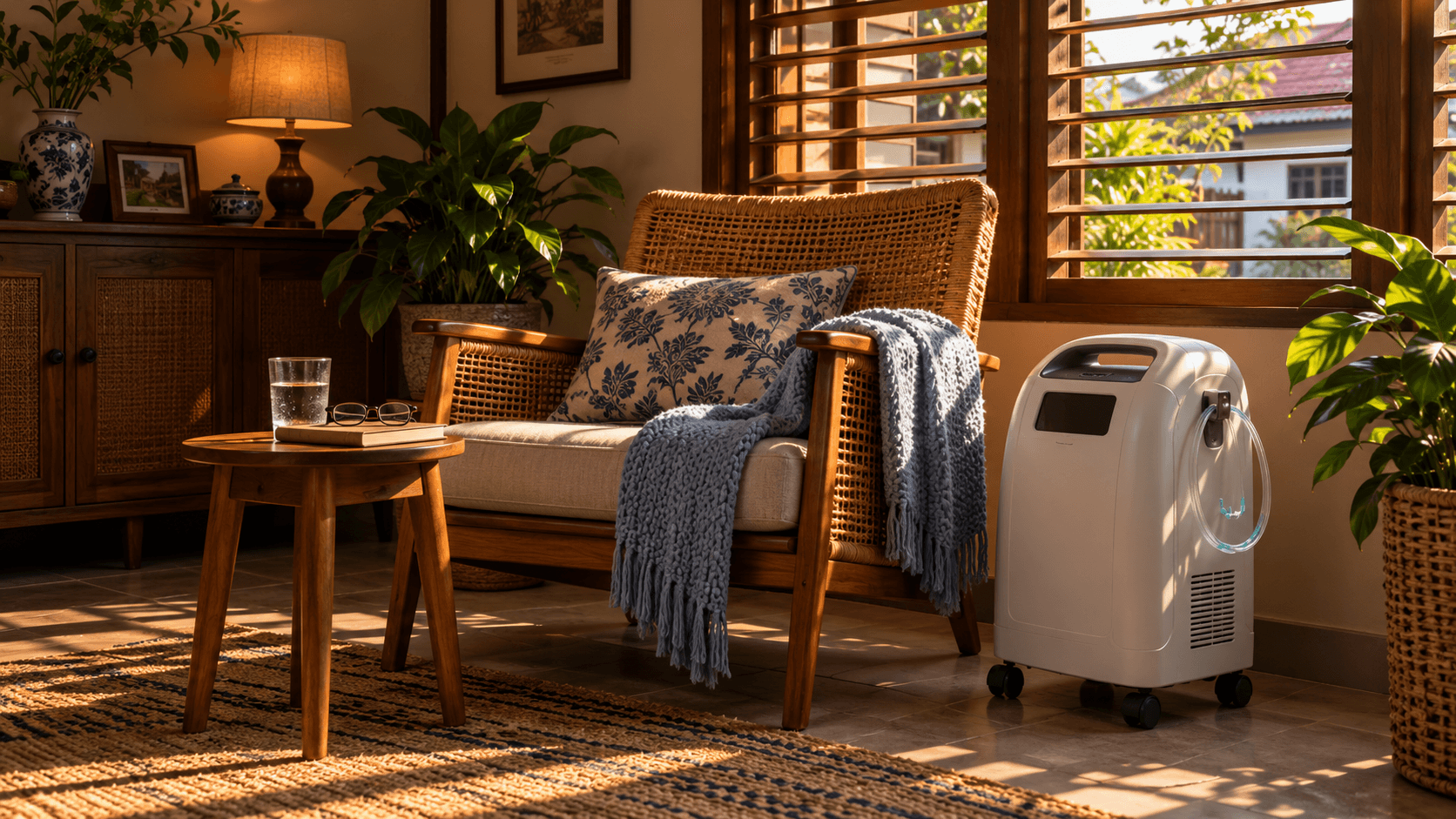
When the doctor says a parent will need oxygen at home, most families in Malaysia face the same first question: an oxygen concentrator or an oxygen cylinder? Both deliver oxygen, but they live in the house very differently. This guide walks through those differences in plain terms so you can have a clearer conversation with the care team.
This article is general household information, not medical advice. The prescription, the settings and how long oxygen is used each day are set by the doctor.
How each option works
The two options solve the same problem from opposite directions. One makes oxygen-enriched air on the spot. The other stores oxygen that was filled somewhere else and brought to your door.
The oxygen concentrator
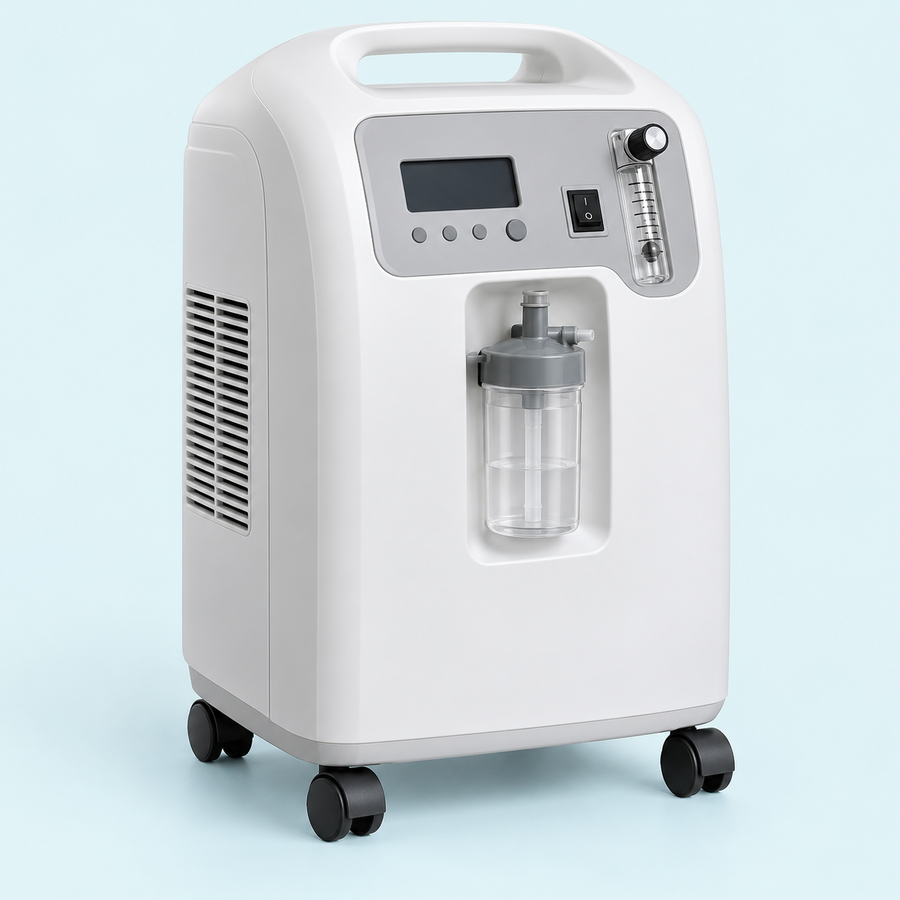
A concentrator is a plug-in machine. It draws in room air, filters out most of the nitrogen and delivers the concentrated oxygen through tubing and a nasal cannula or mask. As long as it has power and is looked after, it does not run out. You can browse the models we carry in our oxygen concentrator range.
The oxygen cylinder
A cylinder is a pressurised metal tank filled at a gas supplier. A regulator on top controls the flow. It needs no electricity, which is its biggest strength, but every cylinder empties and must be swapped for a full one.
Why some homes keep both
Some families use a concentrator as the everyday source and keep a cylinder as a backup for outages or short trips. Whether that makes sense for your parent is a question for the care team, not a rule.
What changes in daily life
The real differences show up in the small routines of a household: who checks what, how often, and what happens when something runs low.
Power and electricity
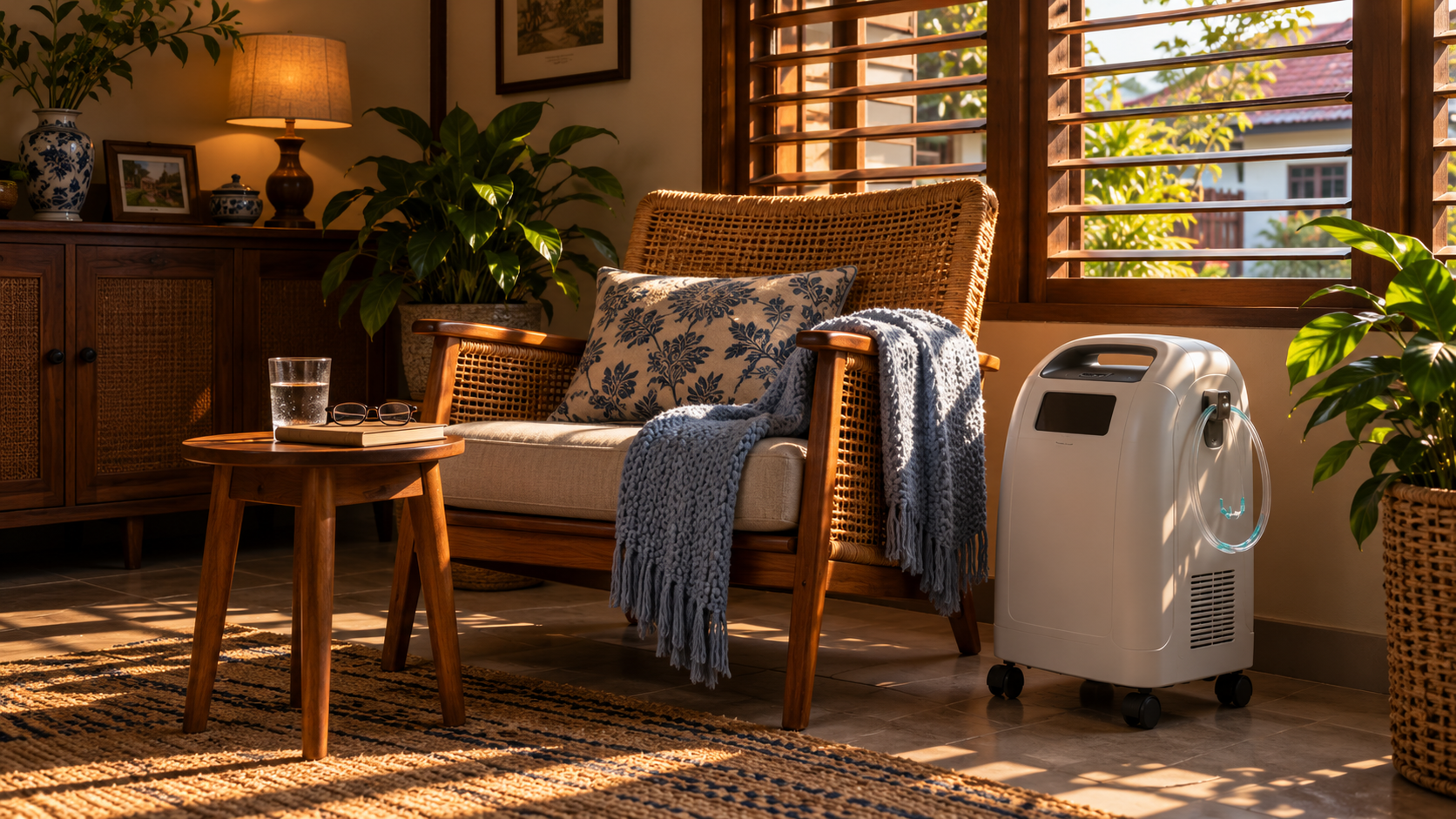
A concentrator needs a steady wall socket. That means thinking about where the plug is, whether an extension cord is safe, and what the plan is during a power cut. A cylinder works anywhere, including during a blackout, which is why it often appears as a backup.
Refills and deliveries
With cylinders, someone has to watch the gauge and arrange refills before the tank runs low. For a parent who uses oxygen for long hours, that can mean frequent swaps. A concentrator removes that job, but adds others: cleaning the filter, keeping the humidifier bottle clean and replacing tubing on schedule.
Space, noise and moving around
Concentrators hum and give off a little warmth, so placement in a bedroom matters. Cylinders are silent but heavy and must be secured so they cannot tip. For moving around the house, both rely on tubing, and longer tubing brings its own tripping risk.
A quick side-by-side
- Concentrator: needs power, no refills, routine cleaning, gentle hum.
- Cylinder: no power needed, needs refills, must be secured upright, silent.
- Both: need tubing checks, a clean cannula or mask and a no-smoking rule.
Safety at home with either option
Oxygen itself does not burn, but it makes anything nearby burn far more easily. That single fact drives most household safety rules, whichever option you choose.
Keep flames and heat away
No smoking anywhere near the oxygen, and no lit candles, joss sticks or gas stoves close by. In Malaysian homes, pay extra attention during prayers, festivals and cooking. A clear sign on the bedroom door helps visitors remember.
Cylinder storage
Cylinders should stand upright in a stand or be strapped in place, away from direct sun and heat sources. Never leave one lying loose in a car boot on a hot day.
Concentrator placement
A concentrator needs space around it to breathe, away from curtains and walls, and should plug straight into the wall where possible. Our separate guide on placement covers this in more detail.
Questions to bring to the doctor
The choice between a concentrator and a cylinder is not just a shopping decision. It depends on what the doctor has prescribed and how your parent lives. Bring these questions to the next appointment:
- Is a home concentrator suitable for this prescription, or is a cylinder needed?
- Will oxygen be used all day, only at night, or only during activity?
- Should we keep a backup source for power cuts?
- Who should we call if the reading on the oximeter worries us?
Write the answers down and keep them near the equipment. The numbers belong to the doctor; your job is to follow the plan and report back.
Matching the machine to the plan
Once you know the prescription, the exact model matters. Specifications differ between the Yuwell 8F-5AW, 7F-5 Mini and 8F-10, and we confirm the details for the exact model on WhatsApp rather than guessing. Our buying guide explains what to have ready before you ask.
Getting set up
We deliver across Malaysia, from families in Kuala Lumpur to those caring for parents in Ipoh and Kota Kinabalu. Alongside concentrators, many families also pick up a fingertip oximeter or a blood pressure monitor from our full catalogue so readings can be shared with the doctor.
Before you message us
Have the prescription or the doctor's note handy, the town you are in, and a rough idea of where the machine will sit. That makes it quick for us to confirm which model fits.
Ready to talk through the options for your parent? Check Availability on WhatsApp and we will confirm the details for the exact model.