Setting Up a Home Care Corner for an Elderly Parent
A tidy home care corner keeps a parent's devices, records and supplies in one calm spot. A practical guide to choosing the place, the furniture and the routine.
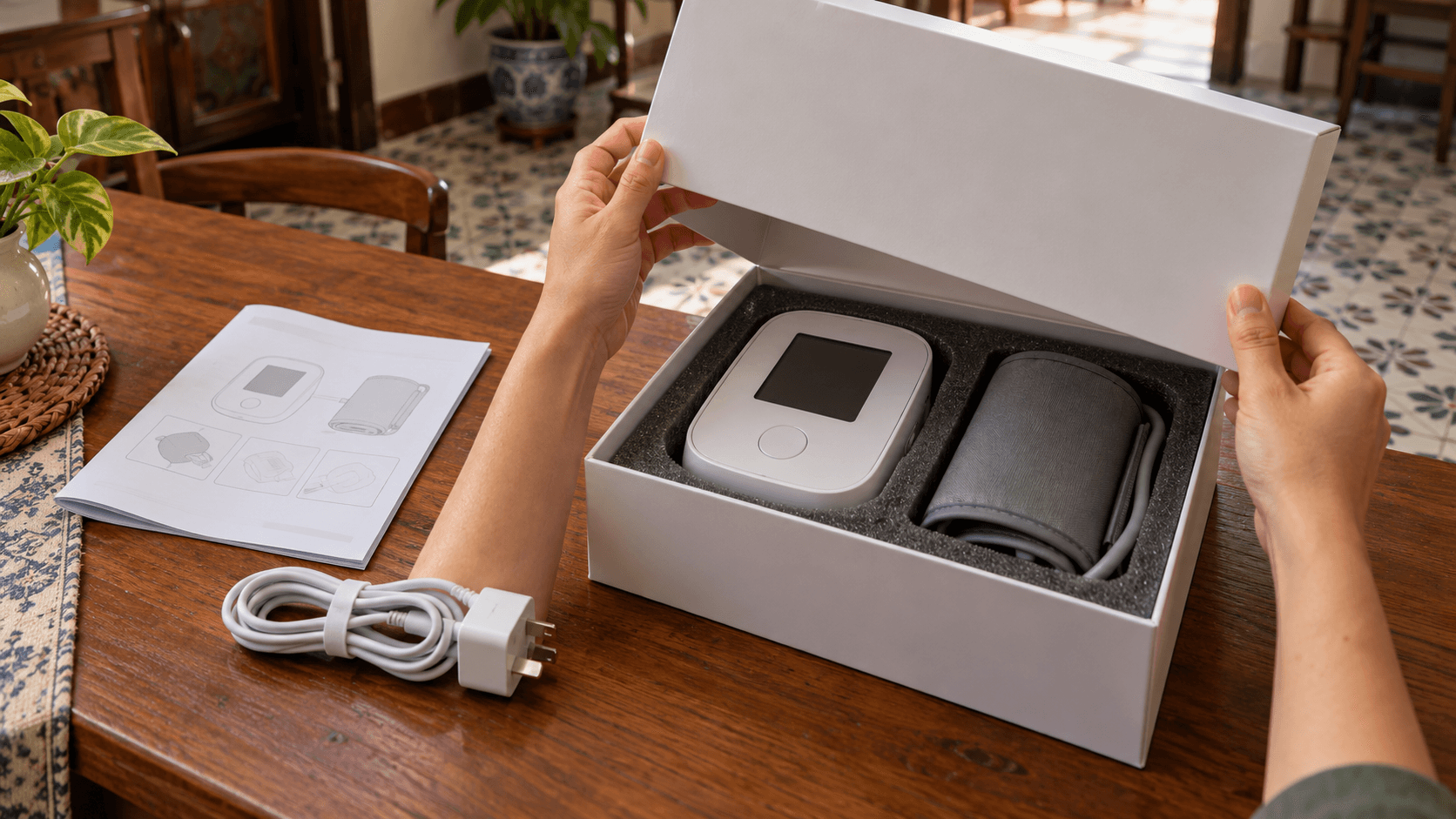
When a parent comes home from hospital, or simply needs more support as they age, the equipment arrives quickly: a blood pressure monitor, an oximeter, perhaps a nebuliser. Without a plan, these end up scattered across drawers and tabletops. A dedicated home care corner keeps everything in one calm, safe spot and makes daily routines easier for everyone who helps.
This is general household information, not medical advice. Which readings to take, how often, and what the targets are, are set by the doctor.
Choosing the spot
The best care corner is somewhere your parent already likes to be. If they spend afternoons in the living room watching TV, that is a better spot than a spare room they rarely enter.
Close to daily life, away from traffic
Pick a corner that is near where your parent sits and sleeps, but out of the main walkway. In a terrace house, that might be the ground-floor room converted from a study. In a condo, a corner of the living room near the window often works well.
Think about the bathroom path
Elderly parents make many trips to the toilet, especially at night. Place the care corner so that the route from the chair or bed to the bathroom is short, well lit and clear of rugs and wires.
Ground floor where possible
If stairs are becoming hard, it is worth moving the corner downstairs now rather than after a fall. Many Malaysian families convert a ground-floor room into a bedroom for exactly this reason.
Furniture, seating and lighting
The furniture does not need to be special. It needs to be steady, the right height and easy to reach.
A firm chair with armrests
A chair with armrests helps your parent sit down and stand up safely. For blood pressure readings, a chair with a back support and a table at elbow height lets them rest the arm properly, as the device manual usually describes.
A sturdy side table or sideboard
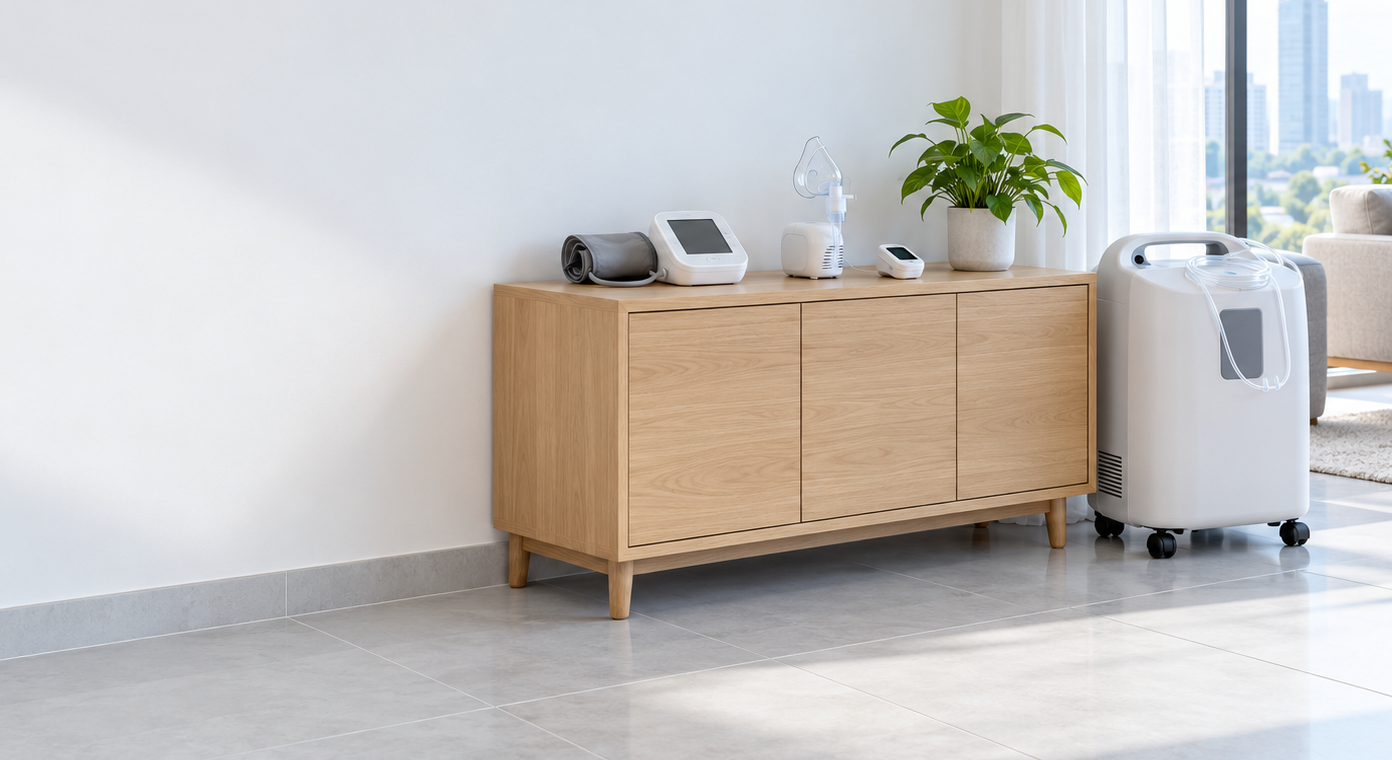
Choose a table that does not wobble, with a top large enough for the devices you use daily. A low sideboard with drawers is ideal: devices on top, supplies inside.
Bright lighting without glare
Older eyes need more light. Add a table lamp so small screens are easy to read, and a night light along the bathroom route. Avoid candles anywhere in the corner, especially if oxygen is used at home.
Power points nearby
Some devices, like a compressor nebuliser, plug in. Make sure there is a wall socket within easy reach so you are not running extension cords across the floor.
Organising devices and supplies
A care corner works when anyone in the family can find what they need in seconds.
What usually lives here
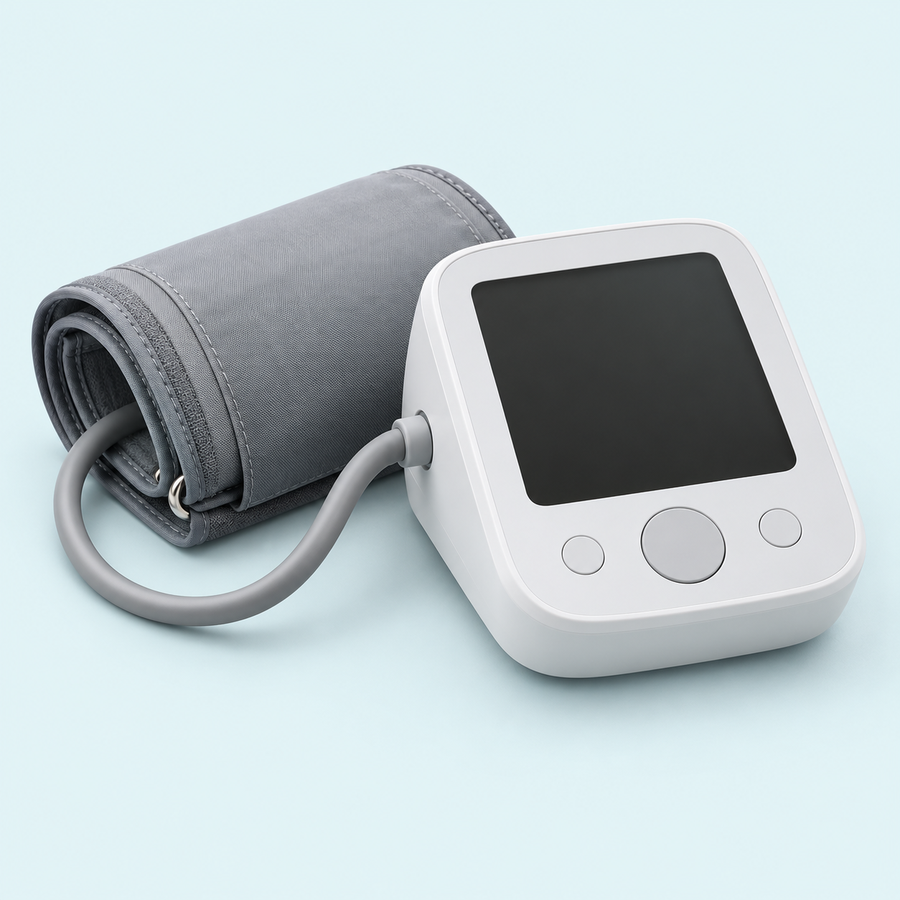
- A blood pressure monitor with its cuff, such as the Yuwell YE660D.
- A fingertip pulse oximeter, if the doctor has asked for readings.
- A compressor nebuliser, like the Yuwell 403T, with its mask and tubing in a clean box.
- Medicines in a weekly pill organiser, kept out of reach of grandchildren.
- Spare batteries, tissues, hand sanitiser and a small waste bin.
Use clear, labelled boxes
Clear boxes with simple labels such as "nebuliser parts" or "spare batteries" help a sibling, a helper or a visiting relative find things without calling you.
Keep manuals together
Put every device manual and warranty card in one folder in the drawer. When something beeps or shows an error, the answer is right there.
Tape a small card inside the drawer too, with the doctor's clinic number, the nearest hospital, the family members to call and the date of the next appointment. In a worrying moment, nobody should have to scroll through a phone looking for a number.
Records and daily routines
Devices only help if the readings reach the doctor in a useful form. A simple record keeps everyone on the same page.
A logbook by the devices
Keep a notebook beside the monitor. Write the date, time, reading and any notes, such as "after breakfast" or "felt dizzy". The reading is for the doctor; your job is to record it accurately, not to interpret it.
Sharing with the family
Many families take a photo of the logbook page each week and share it in the family WhatsApp group. That way, siblings who live elsewhere stay informed and can bring the notes to appointments.
A routine your parent can own
Where possible, let your parent take their own readings and write them down. It keeps them involved and independent, and the corner becomes part of their day rather than a chore done to them.
Keeping the corner safe and clean
A care corner needs a little upkeep to stay useful.
- Wipe device surfaces as the manuals recommend, and wash nebuliser parts after each use.
- Check cables and tubing for cracks once a week.
- Replace batteries before they run flat, not after.
- Keep the floor around the corner clear of rugs, wires and clutter.
- Review the setup when your parent's needs change.
Choosing the right devices
If you are starting from scratch, our buying guide explains what to consider, and the full catalogue shows the Yuwell devices we carry. We confirm the details for the exact model on WhatsApp. We deliver across Malaysia, including homes in Shah Alam, Seremban and Melaka.
Setting up a care corner for your parent? Check Availability on WhatsApp and we will help you pick the right devices.